Best phones for GrapheneOS in 2026: which Pixel to buy
Which phone to buy for GrapheneOS in 2026: Pixel 9a, 10, 10 Pro and 10a compared on support dates, price tier, camera, eSIM and install effort.
The best phone for GrapheneOS in 2026 is a Google Pixel, and for most people it’s the Pixel 9a. GrapheneOS still runs only on Pixels: the project’s own FAQ lists the Pixel 6 through the Pixel 10 family as supported, and its “strongly recommended” list starts at the Pixel 8. So the real question isn’t which brand, it’s which Pixel, and whether to flash it yourself or buy one with GrapheneOS already installed.
This buying guide ranks the phones that make sense right now. We compare them on the five things that decide whether you’ll be happy in three years: how long the phone gets security updates, which price tier it sits in, how good the camera is, whether it takes a physical SIM, and how hard the install is. Every date and spec below comes from GrapheneOS’s own pages or Google’s spec sheets. We haven’t tested these phones in hand; the rankings weigh published facts.
The short answer
- Best value: Pixel 9a. Updates to April 2032, a physical SIM slot plus eSIM, mid-range price tier.
- Best camera on a budget you can still justify: Pixel 10. Adds a 5x telephoto and 12 GB of RAM, updates to August 2032, but US units are eSIM-only.
- Best overall camera and the most RAM: Pixel 10 Pro. Same support window as the Pixel 10, a much stronger camera system, top price tier.
- Longest support: Pixel 10a, supported to March 2033 per GrapheneOS’s table, with a SIM tray.
- No flashing at all: NitroPhone (EU) or Above Phone (US), both Pixels sold with GrapheneOS installed.
- Skip for now: Pixel 11. GrapheneOS doesn’t support it and the project has told buyers to get a Pixel 10 instead.
How we picked
GrapheneOS adds its hardening on top of a phone’s own security hardware, so the phone you start with sets the ceiling. We weighed five things.
Support end date
GrapheneOS updates a Pixel for as long as Google ships firmware and driver patches for it. The FAQ is direct about this: official updates “typically end shortly after end of the minimum guaranteed update support.” Pixel 8 and later get a seven-year minimum from launch, which is why we don’t recommend anything older than the Pixel 8 to a new buyer, even though the Pixel 6 and 7 series still install fine.
Price tier
We group phones into tiers rather than quoting prices, because prices change weekly and especially around sales. Budget means the cheapest current or renewed Pixels, mid-range is roughly the “a” models, and flagship covers the numbered and Pro models.
Camera, SIM and install effort
GrapheneOS ships its own camera app, and sandboxed Google Play lets you install Pixel Camera if you want Google’s processing back. Hardware still decides the result, so a telephoto lens matters. On SIMs, the US Pixel 10, 10 Pro and 10 Pro XL are eSIM-only; that works on GrapheneOS, but adding a new eSIM needs the optional eSIM support toggle, which turns on Google’s eSIM component. Every phone here installs through the same browser-based installer in about 20 minutes, so effort only differs for the preinstalled options, where it drops to zero.
Comparison table
| Phone | Updates until | Price tier | Rear cameras | SIM (US model) | Amazon |
|---|---|---|---|---|---|
| Pixel 9a | April 2032 | Mid-range | 48 MP wide + 13 MP ultrawide | Nano SIM + eSIM | Check on Amazon for the Pixel 9a |
| Pixel 10a | March 2033 | Mid-range | 48 MP wide + 13 MP ultrawide | Nano SIM + eSIM | Check on Amazon for the Pixel 10a |
| Pixel 10 | August 2032 | Flagship | 48 MP wide + 13 MP ultrawide + 10.8 MP 5x telephoto | eSIM only | Check on Amazon for the Pixel 10 |
| Pixel 10 Pro | August 2032 | Top flagship | 50 MP wide + 48 MP ultrawide + 48 MP 5x telephoto | eSIM only | Check on Amazon for the Pixel 10 Pro |
| Pixel 9 (renewed) | August 2031 | Budget to mid-range | 50 MP wide + 48 MP ultrawide | Nano SIM + eSIM | Check on Amazon for the Pixel 9 renewed |
| Pixel 8a | May 2031 | Budget to mid-range | 64 MP wide + 13 MP ultrawide | Nano SIM + eSIM | Check on Amazon for the Pixel 8a |
Support dates are the “OEM minimum support end” column in the GrapheneOS FAQ. You can see all of these side by side with privacy scores in our phone comparison table.
1. Pixel 9a: the best phone for GrapheneOS for most people
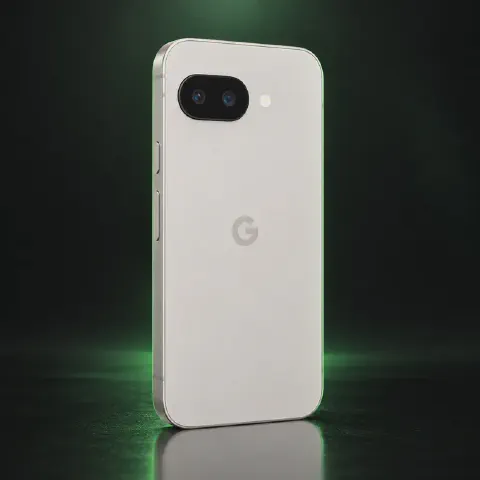
Seven years of updates, a physical SIM slot and the lowest price tier of any phone on GrapheneOS's recommended list.
The Pixel 9a is the easiest recommendation in this guide. It sits on GrapheneOS’s strongly recommended list, gets updates until April 2032, and runs on the same Tensor G4 chip as the more expensive Pixel 9. It keeps a nano-SIM tray next to eSIM, which matters if you move between carriers or travel with local SIM cards, and it’s one of the few current Pixels in the mid-range tier.
What you give up is mostly camera reach: there’s no telephoto, and the ultrawide is a modest 13 MP sensor. It also has 8 GB of RAM against 12 GB in the Pixel 10. Neither matters much for messaging, maps, banking and email, which is what most people actually do on a private phone. If GrapheneOS is your first private OS, start here. Our Pixel 9a specs and install page walks through the unlock and flashing steps for this exact model.
2. Pixel 10: the better camera, if eSIM-only is fine
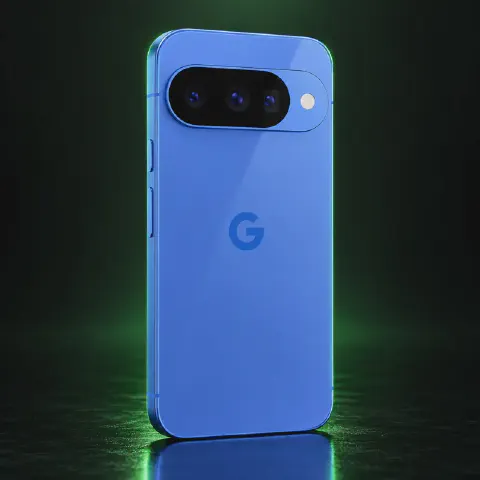
Adds a 5x telephoto, 12 GB of RAM and the Tensor G5, with updates to August 2032.
The Pixel 10 is the phone GrapheneOS itself pointed buyers toward when the Pixel 11 arrived without working memory tagging. It has the Tensor G5, 12 GB of RAM, a 5x telephoto and support until August 2032. If you take photos of your kids at the far end of a sports field, the telephoto is the reason to pay the flagship tier.
The catch for US buyers is the SIM. The US Pixel 10 has no SIM tray at all, only eSIM. Your existing eSIM carries over, but activating a new one on GrapheneOS means switching on its eSIM support setting, which runs Google’s eSIM management component. That’s a reasonable trade for most people, and we cover it on the Pixel 10 phone page. If you want to keep a physical SIM, stay with the 9a.
3. Pixel 10 Pro: the flagship pick
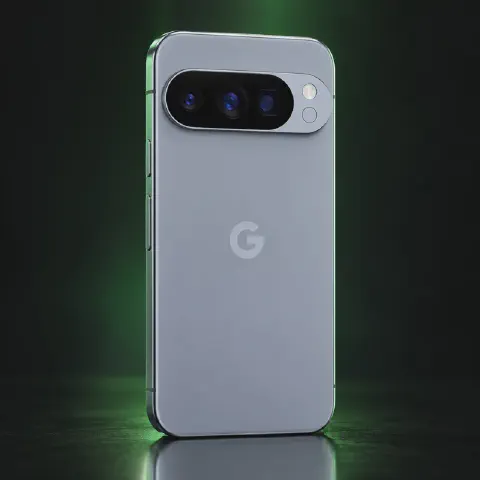
The strongest camera on any GrapheneOS phone, 16 GB of RAM and the same 2032 support window.
The Pixel 10 Pro is for people who want the best hardware GrapheneOS can run. Its three rear cameras are all large sensors, including a 48 MP 5x telephoto, and it has 16 GB of RAM. The extra memory is useful on GrapheneOS because the OS can keep more apps alive in separate user profiles at once.
Get the next guide in your inbox
One email a week: new degoogling guides, OS and device-support news that matters, and one privacy fix you can do in five minutes. No tracking pixels.
It doesn’t buy you a longer support window: it ends in August 2032 like the regular Pixel 10. So the Pro only makes sense if the camera or the brighter, adaptive display is worth the top price tier to you. It’s also eSIM-only in the US. The details are on our Pixel 10 Pro page.
The Pixel 10a: longest support of any GrapheneOS phone
The Pixel 10a isn’t in our main catalog yet, but it deserves a mention: the GrapheneOS FAQ lists its support end as March 2033, the latest of any phone the project supports. It’s a mid-range phone with a 48 MP wide and 13 MP ultrawide camera and no telephoto, and Google’s spec sheet lists a nano-SIM slot plus eSIM, so it avoids the Pixel 10’s eSIM-only catch. If you plan to keep one phone for seven years, it’s the strongest pick on paper. Our Pixel 10a privacy guide covers both the stock-Android route and the GrapheneOS install.
See the Pixel 10a on Amazon
affiliate link — same price for you, small commission for us
Buying used or renewed: Pixel 9 and Pixel 8a
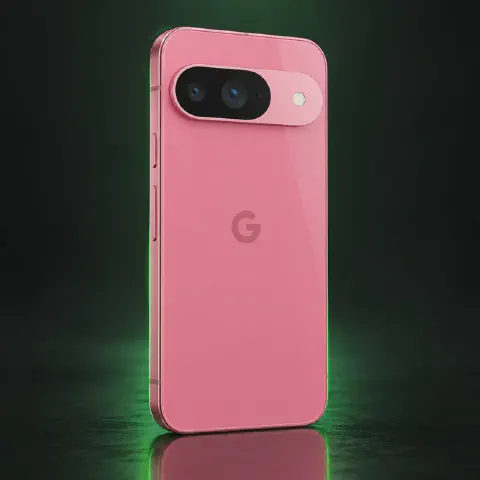
A former flagship with a 50 MP main camera and updates to August 2031, usually sold renewed.
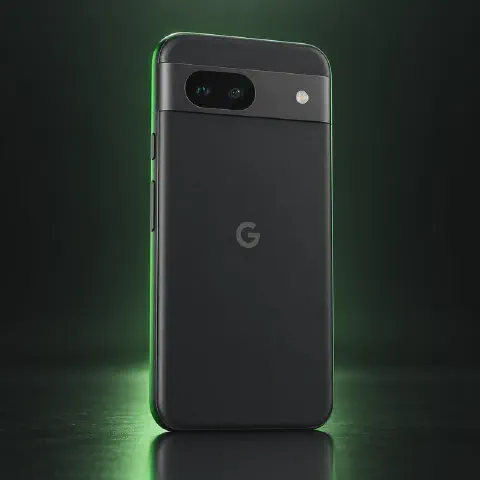
The compact option, with a 6.1-inch screen and updates to May 2031.
A renewed Pixel 9 or a Pixel 8a gets you into the budget tier while staying on GrapheneOS’s strongly recommended list. The Pixel 9 adds a much better 48 MP ultrawide than the 9a, and the Pixel 8a is the smallest current choice. The risk with renewed phones is carrier locking. GrapheneOS’s FAQ warns that carrier-sold devices “may be locked by the carrier, which will prevent installing GrapheneOS,” mostly a US problem. Verizon units are the classic case. Before you buy, make sure the listing says unlocked, and after it arrives, check that OEM unlocking can be switched on in Developer options before the return window closes. Our renewed Pixel 9 page lists what to check.
Want it preinstalled? NitroPhone or Above Phone
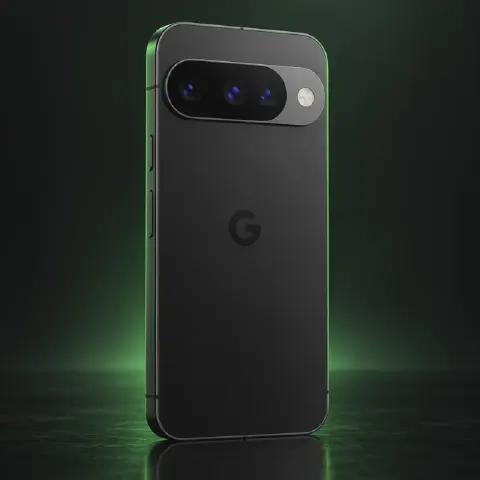
Nitrokey ships Pixels with GrapheneOS installed and checked, from the EU, with optional camera or microphone removal.
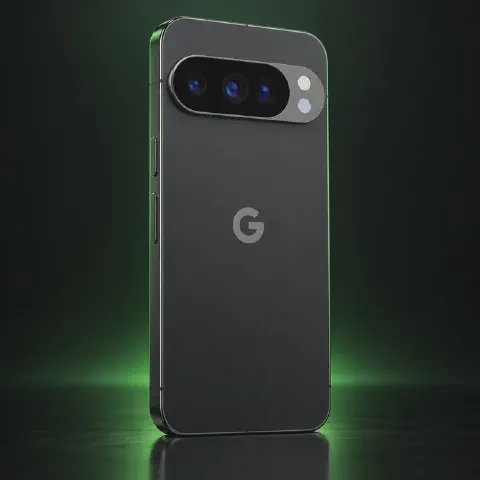
A US company that sells Pixels with GrapheneOS set up, for buyers who never want to touch a cable.
If flashing a phone sounds like the step where you’d give up, buy one ready to go. Nitrokey’s NitroPhone is a Pixel with GrapheneOS installed in Germany, and it can also physically remove microphones or cameras for people with serious threat models. Above Phone does the same for US buyers, with an optional private-services bundle. You pay a premium over a bare Pixel, and both are maker sales rather than Amazon listings. The software is identical to what you’d install yourself, so this is purely about convenience. Our news analysis on preinstalled versus do-it-yourself degoogled phones compares the trade-offs.
Waiting for a non-Pixel: Motorola Signature 27
GrapheneOS confirmed on September 22, 2026 that the Motorola Signature 27 will be its first supported phone that isn’t a Pixel. Motorola lists it for the US and Canada from November 2026, with seven years of updates. As of today, though, GrapheneOS hasn’t released builds for it or said when it will. Buying one now means buying a phone you can’t yet put GrapheneOS on. If you can wait, follow our Signature 27 tracking page; if you need a phone this month, get a Pixel.
What not to buy for GrapheneOS
- Pixel 11 series: not supported. GrapheneOS said in August that it couldn’t finish the port because memory tagging (MTE) is missing, and recommended the Pixel 10 instead. Our Pixel 11 GrapheneOS explainer has the full story.
- Carrier-branded Pixels: a Verizon Pixel usually can’t unlock its bootloader, so GrapheneOS can’t be installed at all.
- Pixel 6 and 7 series for new buyers: they still install, but their support ends years earlier than the Pixel 8 and later.
- Any Samsung, OnePlus or Xiaomi phone: GrapheneOS doesn’t support them. If you already own one, our compatibility lookup tool shows which other private systems might.
After you buy: installing GrapheneOS
Every phone in this guide installs the same way: enable OEM unlocking, connect the phone to a computer running Chrome, Edge or Brave, and let the official web installer unlock, flash and relock it. It takes about 20 minutes. Our step-by-step browser install walkthrough covers it, including the parts that trip people up, like a cable that only charges. To understand what GrapheneOS changes and what it breaks, read the GrapheneOS overview page, and if you’re still deciding between systems, our GrapheneOS vs CalyxOS vs /e/OS comparison lays out the differences.
FAQ
Which Pixel is best for GrapheneOS?
For most people, the Pixel 9a: it’s on the recommended list, gets updates to April 2032 and keeps a physical SIM slot. Pick the Pixel 10 or 10 Pro if you want a telephoto camera, or the Pixel 10a if the longest support window matters most.
Can I install GrapheneOS on a non-Pixel phone?
Not yet. GrapheneOS supports only Pixels today. The Motorola Signature 27 has been confirmed as the first non-Pixel phone, but builds aren’t out. Other private systems such as CalyxOS, LineageOS, /e/OS and iodéOS cover more brands.
Does GrapheneOS work on a carrier Pixel?
Only if the carrier lets you unlock the bootloader. Many US carrier units, Verizon’s in particular, block OEM unlocking, and then GrapheneOS can’t be installed. Buy the unlocked model from Google or a retailer that sells the unlocked version.
Is the Pixel 11 a good phone for GrapheneOS?
No, not as of November 2026. It isn’t on GrapheneOS’s supported list, and the project has advised buyers to choose a Pixel 10 instead because the Pixel 11 lacks working memory tagging.
Do eSIM-only Pixels work with GrapheneOS?
Yes. Existing eSIMs keep working. To add or switch an eSIM, you turn on GrapheneOS’s eSIM support setting, which enables Google’s eSIM component. If you’d rather avoid that, the Pixel 9a, Pixel 10a and Pixel 8a still have a SIM tray.
Is a renewed Pixel safe to use with GrapheneOS?
Yes, as long as it’s an unlocked model and the bootloader can be unlocked. GrapheneOS’s installer replaces all the software, so whatever the previous owner had on it is wiped. Check OEM unlocking within the return window.