Mullvad Android Beta Adds Domain Fronting
Mullvad’s Android beta adds domain fronting, post-quantum API key exchange, tracking resistance, and several connection fixes.

What changed in the Android beta
Mullvad released android/2026.13-beta1 as a prerelease on November 10. The complete Android beta release notes identify Domain fronting as a new access method for reaching the Mullvad API through proxies. It is enabled by default in this build.
Domain fronting is one of several connection-related changes. Mullvad now requires the post-quantum X25519MLKEM768 key exchange for TLS connections to its API. The app also disables TLS session tickets, with the stated purpose of reducing the ability to track clients over time.
The beta replaces grpc-java with Wire as its gRPC library and updates LWO to its improved v2 protocol. Mullvad says GotaTun improves obfuscation performance, mainly for Shadowsocks. These changes concern how the application reaches Mullvad’s infrastructure and handles obstructed connections; they do not change the fact that this is explicitly labeled a prerelease rather than the suggested stable F-Droid build.
Connection and Android fixes
The release addresses a failure in which blocking DNS queries related to connection checks during the ephemeral peer handshake could prevent tunnel setup on some devices. It also adds a workaround for Android failing to restart the VPN application after an app upgrade.
Other networking fixes clear cached routes before a new tunnel is established and improve detection of IPv6 connectivity. Relay and custom lists should now respect the device locale when sorting. A separate correction prevents password managers from saving the Mullvad account number as hidden dots.
Several interface and maintenance details also changed:
- The notification-permission request moves to the connection screen.
- The quick settings tile provides improved connection-state information.
- Daemon logs rotate after seven days or when they reach 2GB. Mullvad notes that the size limit was primarily a desktop issue.
- The initial privacy-consent screen has been removed, so the app opens on the login screen. The privacy policy remains accessible from Settings.
- A software bill of materials, or SBOM, accompanies the GitHub release.
The published tag is signed with a verified committer signature, and GitHub describes the release as immutable apart from its title and notes.
What F-Droid users receive
The current Mullvad VPN package information lists Version 2026.12 as the suggested build. F-Droid added that version on October 2, so it does not yet list android/2026.13-beta1 as its suggested package.
Get the next guide in your inbox
One email a week: new degoogling guides, OS and device-support news that matters, and one privacy fix you can do in five minutes. No tracking pixels.
F-Droid says Version 2026.12 requires Android 9.0 or newer and offers builds for arm64-v8a, armeabi-v7a, x86, and x86_64. Its package is built and signed by F-Droid and guaranteed to correspond to the linked source tarball. The listed download size is 37 MiB.
The package page recommends installing through the F-Droid client. It warns that installing a downloaded APK directly does not provide update notifications and describes that route as less secure. That distinction matters here: the newer beta exists on GitHub, while the F-Droid client continues to present 2026.12 as its suggested version.
F-Droid labels the app as depending entirely on a non-free network service, even though the application itself uses the GNU General Public License version 3. The service requires an account and paid time. According to the package description, creating an account does not require personal information or an email address.
What owners should do
This beta is relevant to a degoogled Android owner who uses Mullvad, especially where reliable access to the service is difficult. It is still a test build, and neither source provides a date for promoting these changes to the suggested F-Droid release.
- Check the installed Mullvad version before changing update channels. F-Droid’s suggested build is 2026.12, while GitHub labels 2026.13-beta1 as a prerelease.
- Use the F-Droid client if stable, repository-managed updates and update notifications are the priority.
- If testing the beta, review its fixes and the changed login and notification flow before installing it.
- After updating, confirm that the quick settings tile accurately shows the connection state and that the tunnel reconnects following an app upgrade.
The package requests network access, notification, startup, and package-query capabilities. F-Droid explains that the installed-app list is retrieved only inside the split-tunneling view and is not sent from the device. It also says logs are never uploaded automatically; sending them requires an explicit user action.
The easiest way to a degoogled phone
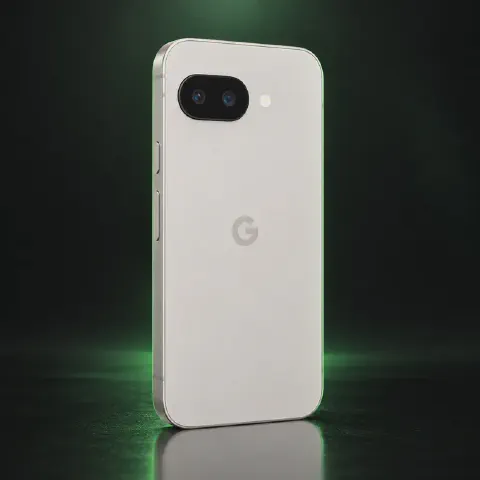
6.3" OLED · updates to April 2032 · GrapheneOS, CalyxOS, iodéOS or LineageOS
Buy buttons may be affiliate links: same price for you, a small commission for us. Side-by-side phone comparison · every private OS explained